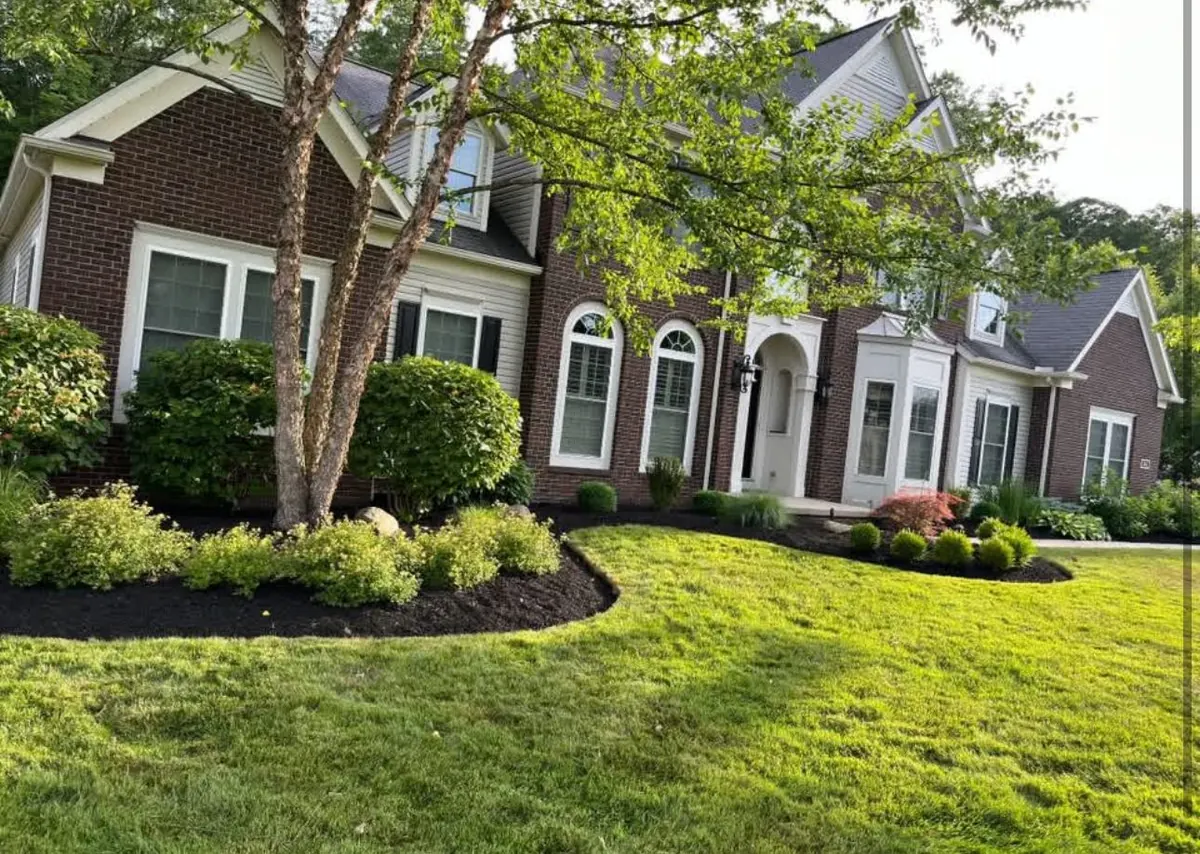
Mulch is the single most cost-effective improvement you can make to a Northeast Ohio property. A few inches of fresh mulch transforms tired beds, suppresses weeds for months, and holds moisture in the clay soils we deal with around Aurora, Chagrin Falls, and Bainbridge.
But homeowners make a lot of mistakes with it. Here's what we tell our clients before we put down a single yard.
How much mulch do you actually need?
The rule of thumb: two to three inches deep across the entire bed surface. Less than that and you lose the weed-suppression and moisture-retention benefits. More than that and you start suffocating roots and creating problems.
To calculate volume:
- One cubic yard of mulch covers about 100 square feet at 3" depth
- Measure each bed: length × width = square footage
- Total square footage ÷ 100 = cubic yards needed
For most homes in Aurora, that's somewhere between 5 and 15 yards. Larger Chagrin Falls and Bainbridge properties can run 20+ yards.
What color of mulch holds up best in Northeast Ohio?
Three main options dominate around here:
Dark Brown / Black
The most popular by far. Dark mulch makes plant colors pop, hides aging well, and looks intentional. The downside: it's dyed, so it fades faster in full sun. Plan to refresh annually.
Natural / Tan Hardwood
Undyed hardwood mulch. Costs less, ages to a silvery gray, and looks more rustic. Better for woodland-style properties — common around the more rural Auburn and Bainbridge properties we work.
Red
We rarely recommend red mulch in Northeast Ohio. It clashes with most home color palettes and fades to a strange pink. If you love it, go for it — but most clients regret it by year two.
When should you refresh?
Most Aurora properties benefit from an annual mulch refresh in late April or early May, right after spring cleanup. Here's the realistic timeline:
- Year 1: Fresh install, looks great all season
- Year 2 (spring): Color has faded; a light top-dress (1") restores the look
- Year 3 (spring): If bed is still 2"+ deep, a top-dress works; if it's broken down to 1" or less, do a full 2-3" reinstall
One trap to avoid: don't keep piling new mulch on year after year without removing the old. Mulch beds shouldn't be more than 4" deep total. Anything beyond that creates moisture problems, attracts pests, and can stress your plants.
The "mulch volcano" — and why we never do them
You've seen it on neighbors' yards: mulch piled up against a tree trunk in a cone shape, sometimes 8 to 12 inches high. This is one of the worst things you can do to a tree.
Mulch piled against bark:
- Holds moisture against the trunk, causing rot
- Encourages roots to grow upward into the mulch instead of down
- Creates the perfect environment for boring insects and fungal diseases
- Slowly kills the tree over 5-10 years
"Mulch should look like a donut, not a volcano. A 3" ring around the tree with a clear gap at the trunk."
Should you use landscape fabric under mulch?
Short answer: no, for most residential beds.
Landscape fabric works against you over time. Weed seeds blow in on top of it, root into the mulch, and become harder to pull. The fabric blocks air, water, and beneficial soil organisms from doing their job. After 2-3 years it usually starts breaking down and becomes a tangled mess.
The exception: under decorative stone or gravel where you're not planting anything. For mulched beds with plants, skip it.
Pre-emergent application
The single best thing you can do alongside mulch installation is apply a pre-emergent herbicide in your beds. Pre-emergent prevents weed seeds from germinating in the first place — meaning your fresh mulch stays clean for 8-12 weeks instead of getting overrun by July.
Timing in Aurora: apply pre-emergent in mid-April, just before the soil temperature reliably hits 55°F. Apply before you mulch, then water it in.
How much should mulch cost in Aurora?
For 2026 in Northeast Ohio, you can expect:
- Dyed dark mulch: $35-45 per yard delivered
- Premium dyed black: $45-55 per yard delivered
- Natural hardwood: $30-40 per yard delivered
Installation labor typically runs $50-80 per yard depending on access, distance from drop, and bed complexity. For most Aurora properties, a full mulch install runs $400 to $1,200 total.
Want a mulch quote for your property?
We'll measure your beds, recommend the right color and depth, and give you a flat price with no surprises.
Get Mulch Quote